AI / VFX compliance audit
A full pass over your generative workflow: which models are in use, where outputs enter the pipeline, and which steps lack a documented control. Delivered as a findings report with severity ratings.
Service · 02 Compliance
Generative AI is creating legal and guild headaches across VFX and post. I audit your AI workflows for provenance, licensing evidence and fail-open gaps — and map them to the studio and guild requirements you actually have to meet.
In short: AI compliance for film and TV means every generative asset is traceable, licensed and defensible. I audit your workflow for provenance, model licensing, fail-open behaviour and guild/studio gaps — then give you the evidence and controls to prove it from set to delivery.
Decision support, not legal advice — always verify the current documents for your delivery.
Scope
A full pass over your generative workflow: which models are in use, where outputs enter the pipeline, and which steps lack a documented control. Delivered as a findings report with severity ratings.
Establishing a chain of custody for every AI asset — model, version, prompt lineage, licensing terms — so you can answer "where did this come from?" with evidence, not guesswork.
A side-by-side against the studio mandates, guild agreements, broadcaster expectations and internal policies you're subject to — showing exactly where your pipeline complies and where it needs remediation.
Stress-testing what happens when a model or service fails: does the pipeline stop cleanly, or substitute an unapproved output? Plus the written governance that keeps AI use auditable.
Method
"Can I use this AI model?" is really four separate questions. Conflating them is where projects get hurt — so each is checked on its own, against a primary source. And the default is always the same: if the evidence is missing, it blocks. A wrong "pass" reaches a client; a wrong "unknown" is an annoyance. When they trade off, we block.
SIDE A
Licence, derivative lineage, territory, revenue thresholds and hardware fit — judged per exact variant, not per brand. A model family is only as clean as its worst member.
SIDE B
Client and broadcaster policy, taken only from a verified, hashed primary source. We do not act on a flag from a document nobody has actually read.
SIDE B2
SAG-AFTRA and IATSE instruments, read against the actual prompt form and use — digital replicas, synthetic performers, consent, notice and residuals.
SIDE C
Training corpus and output rights. A permissive output grant is not a clean corpus — you need both halves, and "opaque" is the honest default until proven otherwise.
Decision support, not legal advice. Built air-gapped and local-first, and grounded in a workflow that shipped to a real network.
Controlled generation
Compliance isn't only about a model's licence — it's about whether you can reproduce, control and prove a specific asset on demand. Here's a deliberately sensitive example: a locally trained LoRA that generates one tightly-scoped object (a prop firearm) for previz and stand-in reference. On a compliant pipeline, that capability is a controlled, documented, single-purpose asset — not an open-ended generator.
Why this is the hard case. The moment a model can make something sensitive, the questions change: who can run it, what it will and won't output, where the training data came from, and how you prove the result wasn't pulled from an unlicensed source.
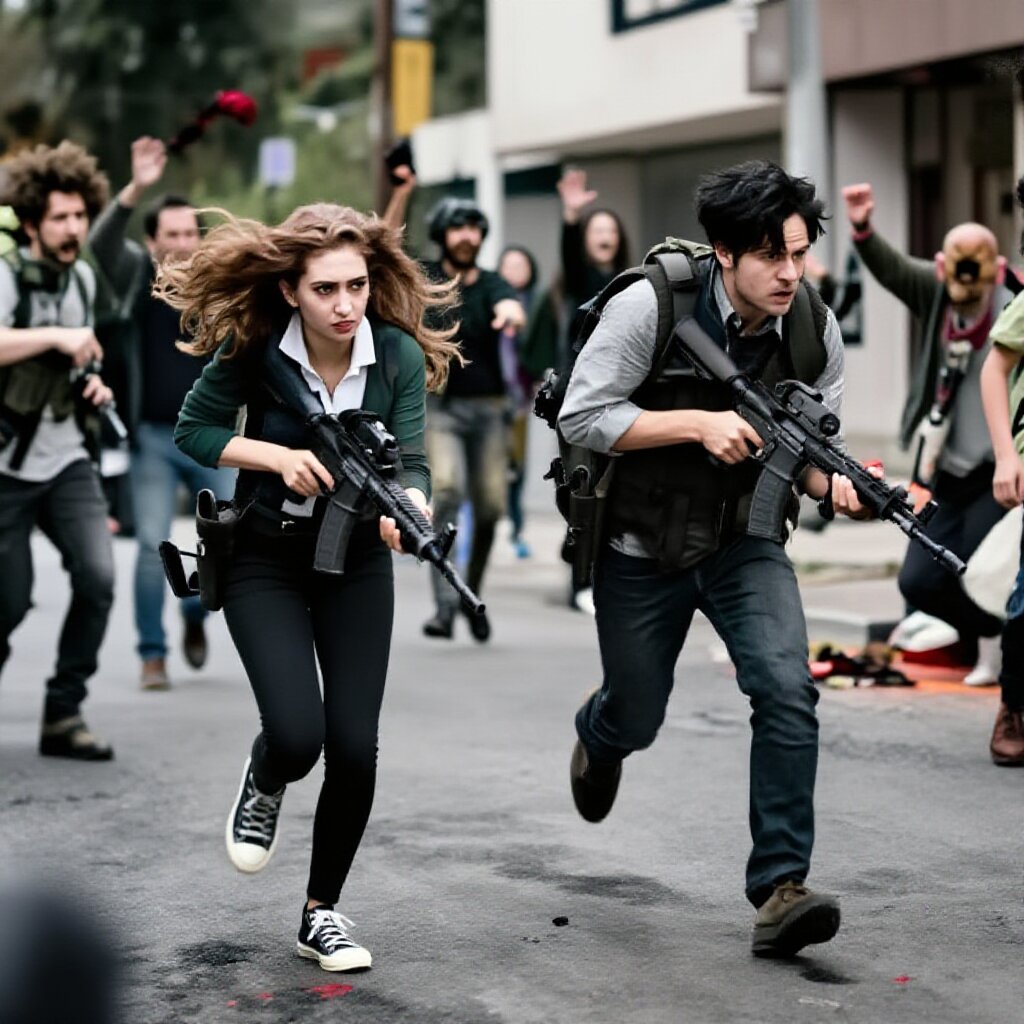
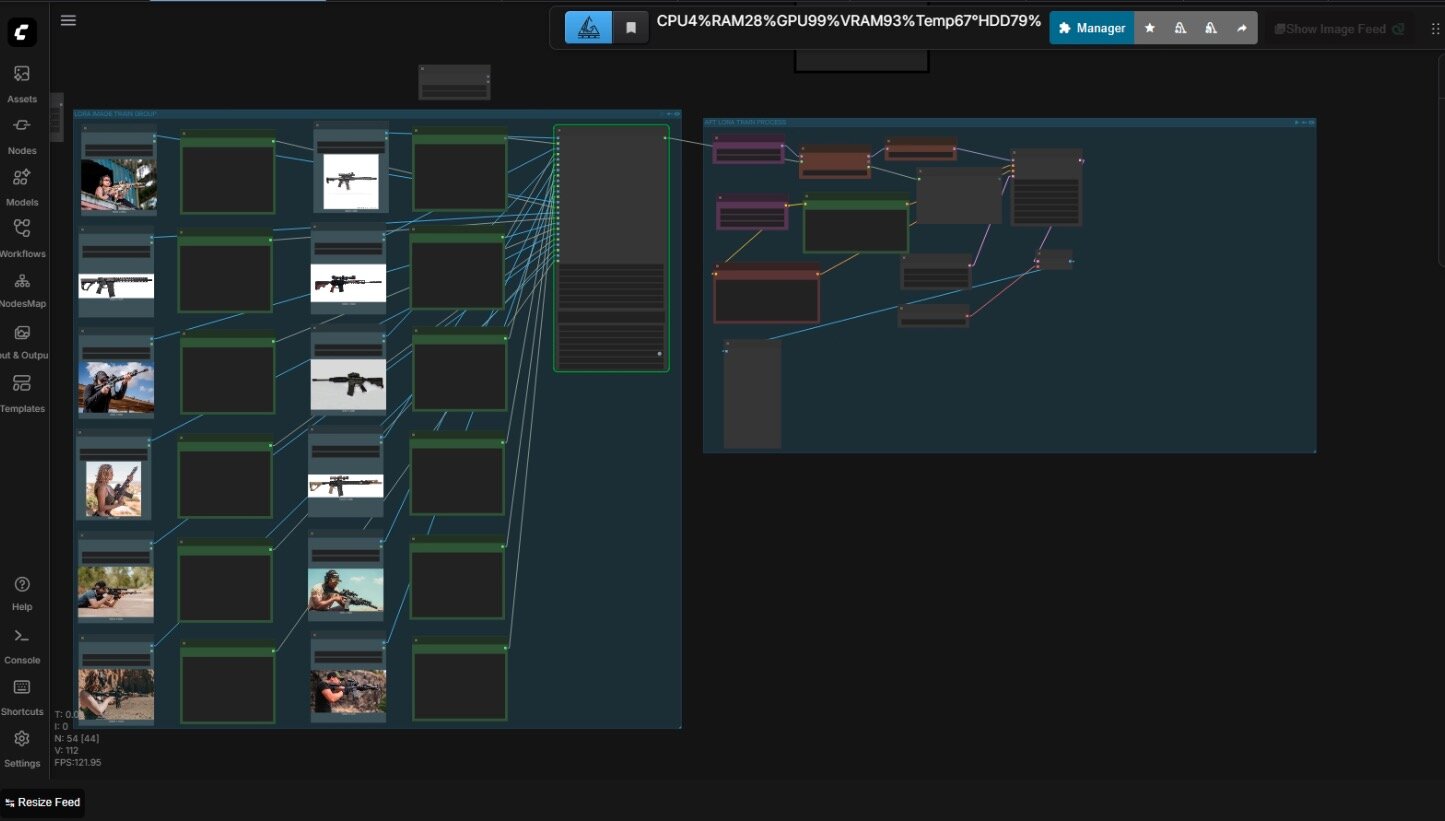
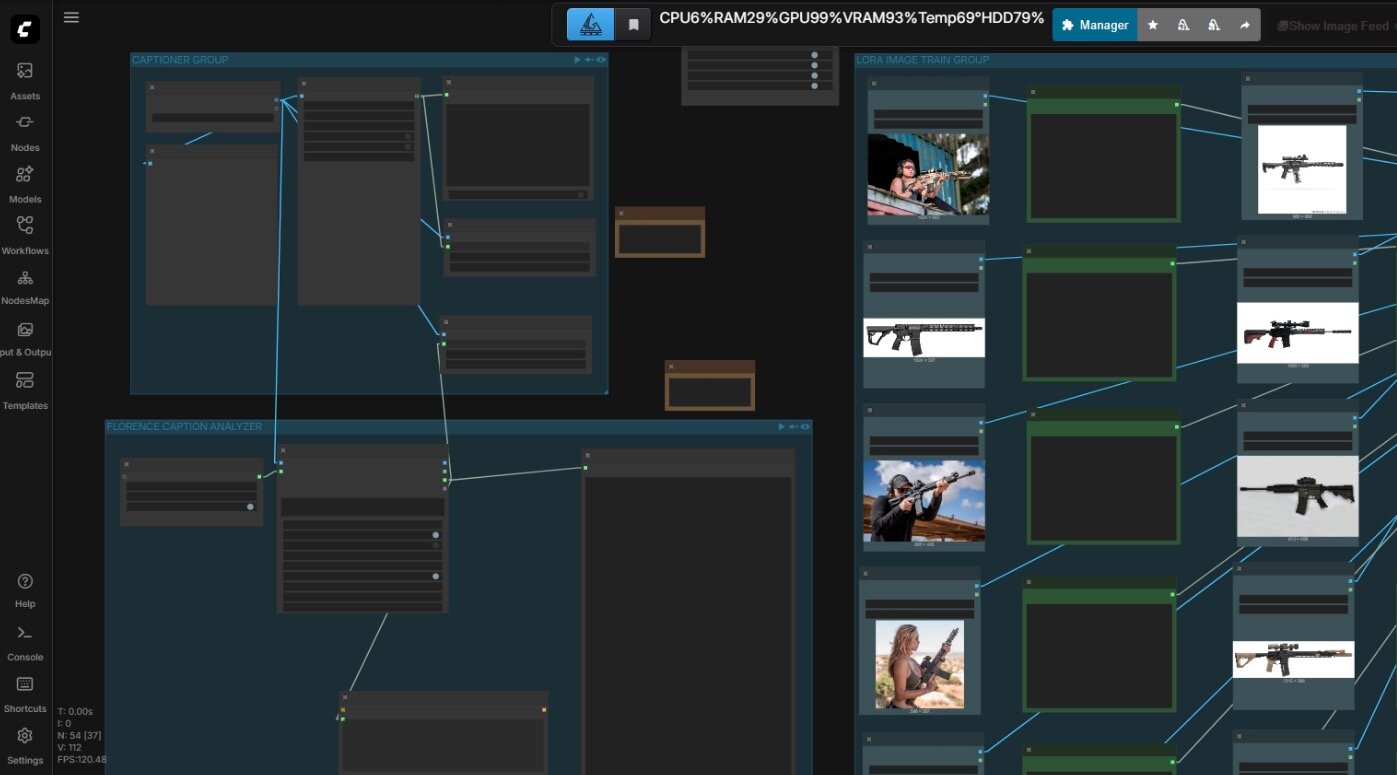


Decision support, not legal advice. The point isn't the object — it's that a sensitive capability can be built, controlled and documented to the same standard as any other asset.
Why it matters
The pattern is always the same: a team adopts a generative tool because it saves days, and the compliance question arrives weeks later — from a studio QC gate, a guild, a distributor, or a lawyer. By then the assets are delivered and the provenance is gone.
A compliance audit is cheap insurance. It documents what you did, proves the licensing, and closes the fail-open gaps — before any of it becomes a problem you can't undo.
Questions
It means every generative-AI asset in a production is traceable, licensed, and defensible — you know which model made it, on what terms, and you can prove it. It covers provenance, model licensing, guild and studio requirements, and the workflow controls that keep AI use auditable from set to delivery.
Because most AI tools are adopted for speed and audited later — if at all. Untracked model use, unclear training data, and missing licensing evidence can surface as legal or deliverables problems at the worst time. A compliance audit closes those gaps before they reach a lawyer or a studio QC gate.
A fail-open audit checks whether your AI workflow degrades safely. When a model, node or service fails, does the pipeline stop with a clear error, or silently substitute an unapproved output? Fail-open gaps are one of the most common compliance holes I find in studio AI workflows.
Yes. I map your AI workflow against the requirements and expectations you are subject to — studio mandates, guild agreements, broadcaster and network expectations, and internal policy — and document where your pipeline meets them and where it needs changes.